
Take a look around any coffee shop, office or waiting room. Chances are you’ll see people with their heads bent over a phone or leaning towards a computer screen. While technology has made life easier in many ways, it has also introduced a growing problem known as Tech Neck.
If you’ve been experiencing a stiff neck, aching shoulders or frequent headaches, your daily screen habits could be to blame.
What is Tech Neck?
Tech Neck is the term used to describe the mechanical strain placed on the neck and upper spine from spending prolonged periods looking down at mobile phones, tablets or computer screens.
Your head weighs approximately 4,5 –5.5 kilograms when held in a neutral position. As your head tilts forward, the force placed on your neck increases dramatically. At a 60-degree angle—similar to looking down at a phone—your neck can experience forces equivalent to carrying around 27 kilograms.
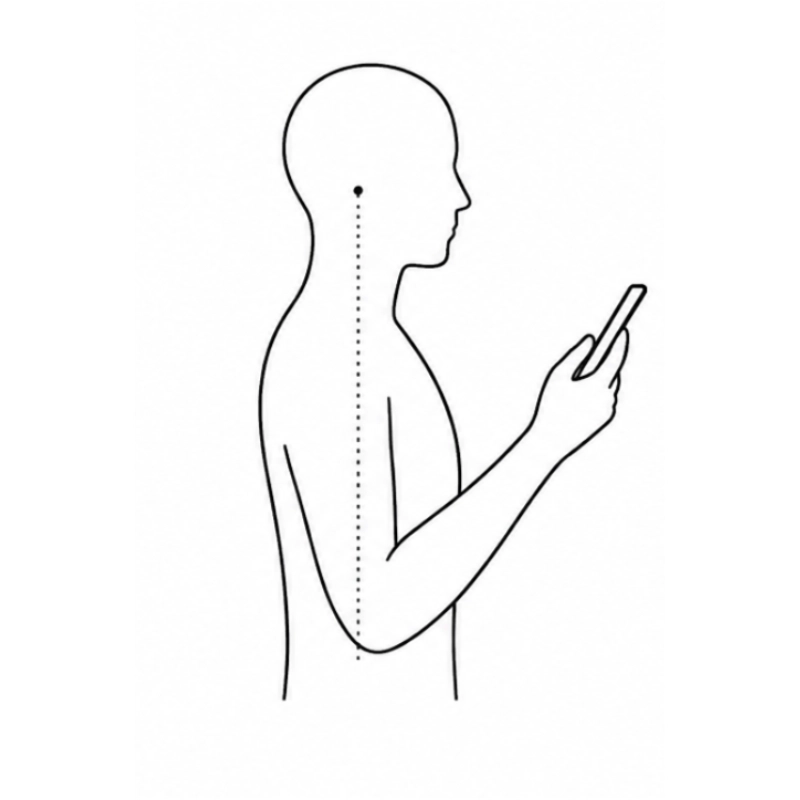
NEUTRAL POSITION
4,5 – 5,5 kg
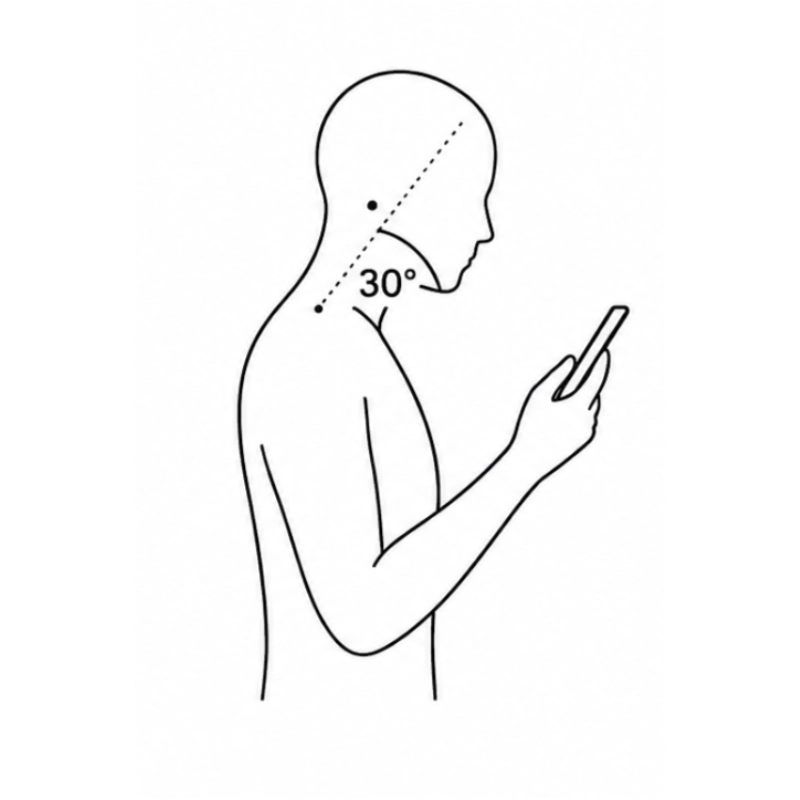
30 DEGREE TILT
18 kg
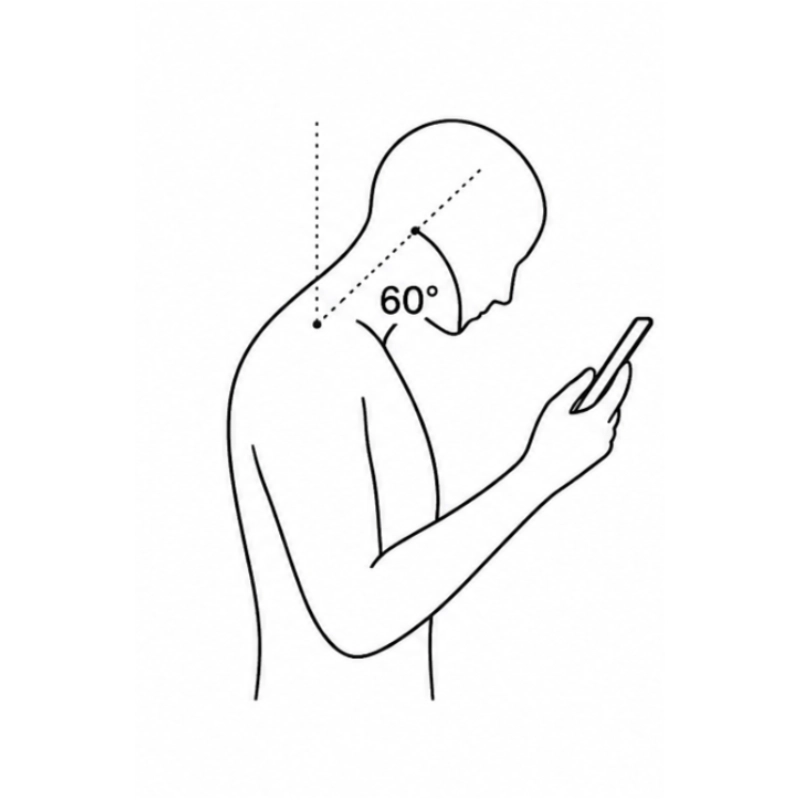
60 DEGREE TILT
27 kg
Over time, this extra load irritates the muscles, ligaments, joints and the nerves that emerge from the lower neck. These nerves travel into the shoulders, arms and upper back, which is why Tech Neck often causes more than just neck pain.
Common Symptoms
You may be experiencing Tech Neck if you notice:
- A stiff or painful neck
- Shoulder tension or aching between the shoulder blades
- Headaches that begin at the base of the skull
- Reduced neck movement
- Pain that worsens after computer work or using your phone
- Tingling or discomfort into the shoulders or arms
- Fatigue in the upper back
These symptoms often develop gradually and become more noticeable as screen time increases.
Why Does It Happen?
When your posture is poor for extended periods, several things occur:
- The muscles at the front and back of the neck become imbalanced.
- The joints of the neck remain under constant pressure.
- The discs between the vertebrae are subjected to uneven loading.
- The nerves in the lower neck can become irritated, contributing to pain, stiffness and headaches.
The longer these stresses continue, the more difficult they become to ignore.
Relief Strategies
If your symptoms are mild, a few simple changes can often help.
Raise your screen
Position your monitor so the top of the screen is roughly at eye level. When using your phone, lift it closer to your face instead of lowering your head towards it.
Move regularly
Avoid sitting in one position for hours. Stand up, stretch and walk around every 30 to 45 minutes.
Stretch your neck and shoulders
Gentle stretches can reduce muscle tension and improve flexibility. Avoid forcing movements that cause sharp pain.
Strengthen your posture
Exercises that strengthen the upper back, shoulder blades and deep neck muscles help support better posture throughout the day.
Create an ergonomic workspace
Ensure your chair supports your lower back, your elbows remain close to 90 degrees and your feet rest comfortably on the floor.
Prevention is Better Than Treatment
The best way to avoid Tech Neck is to make healthy posture habits part of your daily routine.
Remember to:
- Keep your ears aligned over your shoulders.
- Avoid looking down at your phone for extended periods.
- Take regular movement breaks.
- Alternate between sitting and standing if possible.
- Exercise regularly to maintain good muscle strength and flexibility.
Small adjustments made consistently can prevent long-term discomfort.
When Should You Seek Professional Help?
If your neck pain persists despite rest and posture changes, or if you experience recurring headaches, pain travelling into your arms, numbness, tingling or weakness, it is important to have the problem assessed.
A chiropractor can evaluate how your neck joints, muscles and nerves are functioning and develop a treatment plan aimed at reducing pain, restoring movement and addressing the underlying mechanical problem—not simply masking the symptoms.
Your Neck Was Designed to Move
Technology is part of modern life, but pain doesn’t have to be.
By becoming more aware of your posture, taking regular movement breaks and addressing symptoms early, you can keep your neck healthy and avoid turning today’s screen habits into tomorrow’s chronic pain.
If Tech Neck is affecting your work, sleep or quality of life, don’t ignore the warning signs. Early intervention is often the simplest path back to comfortable, pain-free movement.